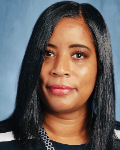
Tracey Allen-McMasters
School Counselor Candidate
Liberty University
|
I’m Tracey Allen-McMasters and I have been a school counselor for four and a half years. I enjoy advocating and helping students to grow in the areas of academics, social/ emotional, and career planning. I am currently a graduate student at Liberty University and will be graduating May 2026. When I am not wearing a hat of a school counselor, I enjoy watching my son play sports, spending time with family, and crafting.
 251211085816_Professional_Growth_Essay.docx (.docx) 0.02mb
 I participated in a group project PowerPoint in COSC 501 where we engaged in ethical and legal dilemmas in school counseling. We were given an ethical dilemma and had demonstrate knowledge of advocating for ethical/ legal procedures and policies, demonstrate the ability to apply and adhere to ethical legal standards in school counseling, and demonstrate the ability to articulate, model, and advocate for an appropriate school counselor identity and program.
251211101711_Ethical_Dil_Group_Project.pdf (.pdf) 4.18mb In COSC 693 I completed a Benchmark Case Conceptualization & School Counseling Services Plan for a student that I provided individual counseling in Internship 1. I was able to gain experience in individual counseling while demonstrating self-awareness and sensitivity to student. During the individual sessions academic, personal/ social growth, and career planning were promoted. We chose SMART goals as our intervention plan, and I also used Solution Focused Therapy and Cognitive Behavior Therapy to work with student. When any issues came up that I was unsure how to handle, I consulted my site supervisor. This project allowed me to reflect and improve my counseling skills and look at what needs to be changed or improve for a better counseling program.
In COSC 611, I was able to participate in a discussion about Crisis and Suicide Counseling Prevention and Intervention which gave me more knowledge on procedures for assessing and managing suicide risk.
Discussion Question
Warning signs for youth suicide that school counselors should know and discuss with staff include:
- Increased Anxiety
- Isolation
- Hopelessness
- Depression
- Feeling Like a Burden
- Mood Swings
- Increased Anger and Rage
- Excessive or Lacking Sleep
- Feeling Trapped
- Current Family Problems
- Evidence of Cognitive Constriction
- Suicidal Ideation
- Previous Suicide Attempts
- Family History of Suicide
There are important actions that a school counselor needs to take when dealing with a student who might be having thought of suicide. First the counselor should evaluate the lethality of the threat and determine risk level. Depending on the risk level will determine the next steps. If the risk is low, counselors can provide an outpatient referral, symptom reduction, and give emergency/ crisis numbers. It the risk is moderate, counselors may have to admit to hospital, if necessary, create crisis plan and suicide precautions, and give emergency/ crisis numbers. If the risk is high, clients are usually admitted to the hospital for further evaluation.
With all clients who struggle with suicidal ideation it is important for counselors to create a written agreement that client will contact counselor before attempting suicide. It is also best practice for counselor to go over an emergency plan with client and provide client with a 24hr emergency crisis line for safety and support. Having a safety plan in place will help to reduce the risk of suicide. The counselor should come up with a plan that carefully monitors client behaviors. If counselor determines the risk level to be high, the counselor may have to arrange hospitalization to keep client safe. If the client is a minor, the counselor has the ethical and legal responsibility to inform client’s parent or guardian. Therefore, the counselor must go over confidentiality limits with minors, so they do not feel betrayed if counselor must disclose to a parent or guardian. It is important to provide parent or guardian helpful resources to support client and to reduce the risk of suicide. If a parent does not take a minor’s mental health seriously or does not take the situation as a potential threat, the counselor may need to contact outside agencies such as DSS. Studies have shown that all schools need an effective comprehensive prevention plan to decrease the number of students contemplating suicide (Granello & Zyromski, 2018).
Schools need a comprehensive prevention plan to reduce the number of students considering suicide.
The ASCA Ethical Standards for School Counselors gives the following guidelines for suicide prevention and intervention:
- If a school counselor receives a report from a student, student’s peer, or school staff about a risk of suicide, the counselor must contact parent and guardian about the risk. The exception to this is when there is abuse and neglect by parent or guardian which has caused the student’s suicidal ideation, the counselor will contact DSS.
- Counselors should always engage in best practice with suicidal concerns and risks.
- Counselors should be able to recognize the threat of suicide among children and create a supportive environment.
- Counselors should raise awareness about suicide and suicide ideation, educate school staff, and provide opportunities to identify resources available to school staff (Desrochers & Houck, 2013)
American School Counselor Association (2019). ASCA national model: A framework for
school counseling programs (4th ed). American School Counseling Association.
ISBN: 9781929289592.
Granello, P. & Zyromski (2018). Developing a comprehensive school suicide prevention
program. Professional School Counseling, 22(1).
https://doi.org/10.1177/2156759X18808128Links to an external site.
Vernon, A. & Schimmel, C. (2019). Counseling children and adolescents (5th ed). Cognella
Academic Publishing. ISBN: 9781516531196.
I also engaged in an individual taped counseling session where I had to use counseling techniques and theories. Please see ink below for peer discussion feedback.
https://libertyuniversity.instructure.com/courses/872000/discussion_topics/8361231?entry_id=28027424
 Resource LinkBenchmark Conceptualization and School Counseling Service Plan- John Doe (High School) (.docx) 0.15mb 251212064126_annotated_Cultural_20Immersion_20Project_20Paper_202.docx.pdf (.docx) 0.12mb 251212070700_Practicum_John_Benchmark_Case_Conceptualization_and_School_Counseling_Services.pdf (.pdf) 0.16mb Brochure for School Counseling Program (.docx) 0.60mb 251212101547_annotated_Internship_20Project_20Classroom_20Guidance_20Unit_20Proposal_20Template_202025.docx_1_.pdf (.docx_1_) 0.16mb Guided Resource Guide (.docx_1_) 0.16mb Teacher/ Parent Presentation of School Counseling Program (.pptx) 3.44mb 251212110152_2025_12_12_Evaluation.doc (.doc) 0.04mb
 AIA Standard: Foundations, Counseling Prevention & Intervention, Academic Development, Collaboration & Consultation, Leadership
260515011658_Liberty_University_Evaluation_Final_AIA.pdf (.pdf) 0.22mb AIA Standard: Foundations, Counseling Prevention & Intervention, Academic Development, Collaboration & Consultation, Leadership
260515011535_2026_COSC_694_Benchmark_Allen_Benchmark_Case_Update_2_.docx (.docx) 0.06mb AIA Standard: Foundations, Counseling Prevention & Intervention, Academic Development, Collaboration & Consultation, Leadership
260515010917_2026_Benchmark_COSC_693_Final_AIA.htm (.htm) 0.13mb AIA Standard: Foundations, Counseling Prevention & Intervention, Academic Development, Collaboration & Consultation, Leadership
260515010602_2026_COSC_693_Case_Concept_and_School_Treatment_Plan.docx (.docx) 0.06mb AIA Standard: Counseling Prevention & Intervention
260515125904_2026_Practicum_AIA.pdf (.pdf) 2.15mb AIA Standard: Counseling Prevention & Intervention
260515125344_2026_COSC_692_Practicum_Benchmark_Case_Conceptualization_School_Counseling_Services_Treatment_Plan_Template.docx (.docx) 0.06mb AIA Standard: Collaboration & Consultation, Academic Development
AIA Standard: Collaboration & Consultation, Academic Development
260515124011_COSC_661_Updated_SC_Brochure_Template_2_.docx (.docx) 0.48mb AIA Standard: Diversity & Advocacy, Collaboration & Consultation
260515123504_2026_Benchmark_COSC_660_Parent_Teacher_Presentation_1A_1_1_.pptx (.pptx) 23.34mb AIA Standard: Assessment
260515125007_Initial_Interview_COSC_622.docx (.docx) 0.02mb AIA Standard: Assessment
260515122004_COSC_622_BENCHMARK_EXPLORING_RELIABILITY_AND_VALIDITY_1_1_.docx (.docx) 0.04mb AIA Standard: Counseling Prevention & Internvention
260515121742_2026_Benchmark_Comprehensive_Child_and_Adolescent_Counseling.docx (.docx) 0.05mb AIA Standard: Research and Evaluation
260515121036_COUC_515_BENCHMARK_QUALITATIVE_RESEARCH.docx (.docx) 0.02mb AIA Standard: Foundations, Counseling Prevention & Intervention
260515115831_2026_Benchmark_Critical_Incident_Paper_Assignment_Correction.docx (.docx) 0.02mb AIA Standard: Foundations, Counseling Prevention & Intervention
260515115734_2026_Benchmark_Psychoeducational_Group_Worksheet_1_.docx (.docx) 0.02mb AIA Standard: Counseling Prevention and Intervention
AIA Standard: Counseling Prevention and Intervention
260515113913_2026_Benchmark_Final_Skills_Competency_Scale_SCS_Participation_Template.docx (.docx) 0.02mb AIA Standard: Counseling Prevention and Intervention
AIA Standard: Diversity & Advocacy, Counseling Prevention & Intervention
260515113616_2026_Benchmark_Cultural_Immersion_Project_Paper.docx (.docx) 0.04mb AIA Standards: Diversity & Advocacy, Counseling Prevention & Intervention
260515113429_2026_Benchmark_Cultural_Paper_2022.docx (.docx) 0.03mb AIA Standard: Foundations
260515113007_2026_Benchmark_Attitudes_and_Beliefs.docx (.docx) 0.02mb AIA Standard: Foundations
260515111429_2026_Benchmark_Ethical_Vignette_Paper.pdf (.pdf) 0.65mb The purpose of this guidance lesson plan was to help students begin to explore different careers. Early exposure can link a student’s interest to planning the starts of their future, boosts academic ambitions, and develop needed skills like problem solving and critical thinking. Lesson covered were: Classroom Guidance Lesson 1: When I Grow Up..., Classroom Guidance Lesson 2: Let Me Find Out, Classroom Guidance Lesson 3: What Job Fits My Personality, and Classroom Guidance Lesson 4: Post Cards to the Future.
260515122955_2026_COSC_694_Student_Career_Exploration_PPT_1_.pptx (.pptx) 0.97mb The “Freshmen Year Foundations” was for any 9th graders who wanted to establish study habits that work for them, explore new interests, and start planning for their future. These units allowed students to reflect on themselves and explore opportunities to transition into high school smoother and learns ways to become a better student.
260515123214_2026_COSC_693_PPT_Freshmen_Year_Foundations_3_.pptx (.pptx) 3.91mb Attached is my small group done on Academic Success for 11th and 12th graders. For the Academic Success Group, surveys were given to students to support the needs of the group. The surveys gave school counselors an opportunity to collect, analyze data and to look at if the effectiveness of the group will yield academic improvements in the areas of tweeners being on correct grade level cohort, increase in attendance, and ways to decrease stress. The topics covered in small group were: studying habits/ skills, time management skills, asking for help, and taking responsibility.
260515123541_2026_COSC_692_ACADEMIC_SUCCESS_PPT_1_.pptx (.pptx) 6.42mb 260515032811_2026_COS_694_Internship_Field_Exp_Update.docx (.docx) 0.03mb 260515022028_A_Internship_II_FES.pdf (.pdf) 3.85mb Prompt #1: – In your own words, summarize how serving in both elementary and secondary schools has contributed to your understanding of the diverse developmental needs of K-12 students, including exceptionalities? What have you learned about how K-12 students differ in their development and approaches to learning? How have you created opportunities that are adapted to diverse learners?
Serving in both elementary and secondary schools has given me a broader understanding of how students develop academically, socially, emotionally, and behaviorally across K-12. I have learned that students’ needs change significantly as they grow, and effective teaching requires flexibility, patience, and responsiveness to those differences. Working with students of varying ages and abilities, including students with exceptionalities, has helped me recognize that development is not one-size-fits-all and that every learner benefits from individualized support and meaningful relationships.
Across both settings, I learned that students differ in their approaches to learning based on their developmental stage, cultural background, interests, learning styles, and individual abilities. Some students learn best through visual or hands-on experiences, while others thrive with discussion, technology integration, or independent practice. Students with exceptionalities may require accommodations, modified instruction, assistive technology, flexible pacing, or additional behavioral and emotional supports to access learning successfully.
To create opportunities adapted to diverse learners, I have used differentiated instruction, small-group support, scaffolding, and multiple methods of engagement and assessment. I have incorporated visual aids, interactive activities, cooperative learning, and technology to support various learning preferences and abilities. I have also worked to create inclusive classroom environments where students feel respected, supported, and encouraged to participate. By building strong relationships, maintaining high expectations, and adapting instruction to meet individual needs, I have been able to help students of all backgrounds and ability levels access meaningful learning experiences and demonstrate growth.
Prompt #2: – The Association for Spiritual, Ethical, and Religious Values in Counseling (ASERVIC) states, “The professional counselor recognizes that the client’s beliefs (or absences of beliefs) about spirituality and/or religion are central to his or her worldview and can influence psychosocial functioning.” How have your field experiences contributed to your understanding of the importance of including K-12 students’ religious and spiritual supports, especially if religion and spirituality are valued by the K-12 student?
My field experiences in K-12 settings have helped me better understand the importance of recognizing and respecting students’ religious and spiritual beliefs as part of their overall identity and support system. I have learned that for many students and families, spirituality and religion play a significant role in shaping values, coping strategies, relationships, decision-making, and emotional well-being. Acknowledging these beliefs in an ethical and culturally responsive manner allows educators and counselors to better understand students’ worldviews and provide more meaningful support.
Through my experiences, I have observed that students often draw strength, comfort, and resilience from their spiritual or religious beliefs, especially during times of stress, transition, grief, family difficulties, or academic challenges. In some cases, students have referenced prayer, faith communities, religious traditions, or family beliefs as sources of encouragement and stability. These experiences reinforced for me that spiritual and religious supports can positively influence students’ psychosocial functioning, sense of belonging, and emotional health when they are personally meaningful to the student.
I have also learned the importance of approaching these conversations with sensitivity, respect, and professionalism. Rather than making assumptions about students’ beliefs, I have focused on creating an inclusive and supportive environment where students feel safe expressing important aspects of their identity. This includes listening without judgment, being culturally aware, respecting diverse belief systems, and recognizing that some students may identify strongly with a faith tradition while others may not identify with religion or spirituality at all.
My field experiences have further emphasized the importance of collaborating with families and understanding the cultural and spiritual values that may influence a student’s behavior, communication, and support needs. By considering these factors, educators and counselors can better build trust with students and families and respond more effectively to individual needs.
Additionally, working with diverse student populations has shown me that honoring students’ spiritual or religious supports does not mean promoting any specific belief system. Instead, it means recognizing spirituality and religion as potentially important protective factors and sources of resilience for some students. When appropriate and ethically appropriate within the school setting, acknowledging these supports can strengthen rapport, encourage student well-being, and contribute to a more inclusive and respectful educational environment.
Overall, my field experiences have deepened my understanding that students’ spiritual and religious beliefs, when valued by the student and family, are important aspects of identity that should be approached with empathy, cultural competence, and respect in order to support the whole child.
Prompt #3 – How have your field experiences contributed to your understanding of the importance of including the K-12 student's family, community, and culture as a source of support?
My field experiences in K-12 settings have strengthened my understanding of the important role that family, community, and culture play in supporting student development and academic success. I have learned that students do not exist independently from their environments; rather, their experiences, values, behaviors, and learning are deeply influenced by their families, cultural backgrounds, and communities. Recognizing these influences allows educators and counselors to better understand students’ strengths, challenges, motivations, and support systems.
Through my experiences, I observed that family involvement often has a direct impact on student confidence, engagement, behavior, and academic progress. Families provide emotional support, structure, encouragement, and advocacy that can significantly influence a student’s success in school. I learned the importance of building positive relationships with families through respectful communication, active listening, and collaboration. When families feel valued and included, students are more likely to experience consistency and support between home and school environments.
My field experiences also helped me understand the value of community as a source of support for K-12 students. Schools are connected to larger communities that provide important resources, mentorship, extracurricular opportunities, and social services. I observed how community partnerships and support systems can help address students’ academic, social, emotional, and behavioral needs. Community organizations, after-school programs, faith-based groups, and local support services can all contribute to student well-being and create additional opportunities for growth and success.
Additionally, working with students from diverse cultural backgrounds deepened my appreciation for the importance of cultural responsiveness in education and counseling. I learned that culture influences communication styles, family expectations, attitudes toward education, social interactions, and approaches to problem-solving. Taking time to understand and respect students’ cultural identities helps create more inclusive and supportive learning environments. I also became more aware of the need to avoid assumptions and biases while recognizing and valuing the unique strengths that students and families bring to the school community.
My experiences reinforced that culturally responsive and family-centered practices help students feel seen, respected, and understood. I have worked to create supportive environments by incorporating inclusive communication, encouraging family participation, showing respect for diverse traditions and perspectives, and adapting interactions to meet the needs of different students and families. These experiences taught me that meaningful collaboration with families and communities not only supports student achievement but also promotes trust, belonging, and emotional well-being.
Overall, my field experiences have shown me that family, community, and culture are essential sources of support that contribute significantly to the success and development of K-12 students. By valuing these connections and working collaboratively with students’ support systems, educators and counselors can better meet the diverse needs of all learners and promote positive outcomes both inside and outside of school.
Prompt #4 – How has your field experience strengthened your professional identity as a school counselor? What aspects of the school counselor's role, scope of practice, and the referral process have you learned from collaboration and consultation?
My field experiences have significantly strengthened my professional identity as a school counselor by allowing me to apply counseling knowledge and skills in real-world K-12 settings while collaborating with students, families, teachers, administrators, and support staff. Through these experiences, I have gained a clearer understanding of the school counselor’s role as an advocate, leader, collaborator, and support system for students’ academic, social/emotional, and career development. Observing and participating in daily school counseling responsibilities helped me recognize the importance of building relationships, maintaining ethical standards, and supporting the overall well-being of all students.
One of the most important lessons I learned is that school counselors serve a unique and essential role within the school community. School counselors are responsible for providing preventive services, individual and group counseling, crisis response, academic support, and social-emotional interventions while also helping students develop skills for success both in and outside of school. My field experiences demonstrated the importance of implementing comprehensive school counseling programs that address the diverse developmental needs of K-12 students. I also learned how school counselors advocate for equity, inclusion, and access to resources to help all students succeed.
Through collaboration and consultation with teachers, administrators, school psychologists, social workers, special education staff, and families, I developed a deeper understanding of the importance of teamwork in supporting students. Effective collaboration allows school counselors to gather information, identify student needs, develop intervention strategies, and create consistent support systems across school and home environments. I learned that consultation is an ongoing process that requires active listening, professionalism, cultural responsiveness, and clear communication in order to support student growth effectively.
My field experiences also increased my understanding of the school counselor’s scope of practice and professional boundaries. I learned that while school counselors provide short-term counseling and support within the educational setting, some student concerns require additional services beyond the counselor’s role. Situations involving severe mental health concerns, trauma, abuse, substance use, or long-term therapeutic needs may require referrals to outside professionals or community agencies. Understanding the limits of the school counselor’s role reinforced the importance of ethical decision-making and knowing when additional support is necessary to ensure student safety and well-being.
Additionally, I learned the importance of the referral process through observing and participating in collaboration with families, administrators, and outside service providers. I saw how referrals help connect students and families to appropriate mental health services, academic resources, behavioral supports, and community programs. I learned that the referral process requires careful documentation, communication, confidentiality, and follow-up to ensure students receive the support they need. Building trust with students and families during this process is essential in helping them feel supported and understood.
Overall, my field experiences helped me develop confidence in my professional identity as a school counselor while deepening my understanding of the counselor’s role, ethical responsibilities, collaborative practices, and referral procedures. These experiences reinforced my commitment to advocating for students, supporting diverse needs, and contributing positively to the school community through collaboration, compassion, and professionalism.
260515071953_Restraint_and_Seclusion.pdf (.pdf) 0.16mb 260515071829_Child_Abuse_and_Neglect_Certificate.pdf (.pdf) 0.12mb 260515073145_Schools_and_Grief_Helping_Students_Cope_with_Death_Certificate.pdf (.pdf) 1.86mb 260515073836_Certificate_PFA.pdf (.pdf) 0.55mb 260515073436_Supporting_Caregivers_of_Youth_with_Substance_Use_Problems_Certificate.pdf (.pdf) 1.86mb 
SHARE